

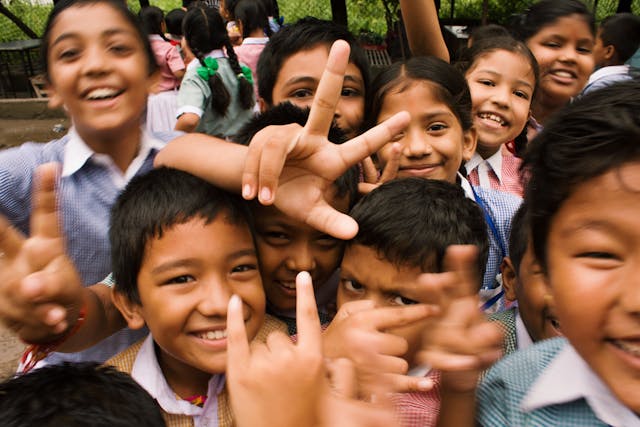
The Silent Dropouts of Progress
In the back lanes of India’s villages, far from bustling cities and digital campuses, countless children have slipped through the cracks of a system that was never built to hold them. These are the invisible classrooms — homes without connectivity, fields that double up as study desks, and minds that hunger for knowledge but starve for access.
While India boasts rising literacy rates and global tech acclaim, the children of its rural belts are still struggling to spell their future.
When Classrooms Closed, So Did Opportunity
The COVID-19 pandemic forced millions of children out of physical classrooms. But for India’s rural children, many of whom had never touched a tablet or seen a smartphone, online education wasn’t just hard — it was impossible.
With no internet access, no personal devices, and no one to guide them through syllabi, children in villages like those in Uttar Pradesh, Jharkhand, and Odisha quietly dropped off the educational map.
For many girls, school closures also meant early marriages, domestic work, and the permanent end of their dreams.
A Generation at Risk
This isn’t just about missed classes — it’s about missed childhoods.
Studies now reveal an alarming increase in learning loss among rural students, especially in foundational skills like reading and arithmetic. For first-generation learners, this isn’t just a gap; it’s a cliff.
Where the System Fails, Hope Steps In
At the Neera Loomba Foundation, we believe that no child should be left behind — especially not because of geography or poverty.
Through our community-led learning programs, mobile teaching kits, and child-centric campaigns, we are helping rural children reconnect with education — one village, one classroom, one child at a time.
In partnership with local teachers and volunteers, we’re setting up bridge courses, safe learning spaces, and mentorship circles to rekindle a love for learning and keep dreams alive.
Voices From the Ground
“When the school shut, I thought my studies were over. But then Didi came with books and games, and now I want to be a nurse.”
— Roshni (11), Budaun District
“My son couldn’t attend online classes, but the learning kit from the Foundation made him feel like school came home.”
— Suresh, Farmer, Jharkhand
What Can You Do?
Sponsor a child’s education kit.
Support rural digital classrooms.
Volunteer your time or skills.
Share their story so they aren’t forgotten.
Let’s Not Let Geography Decide Destiny
India’s children deserve more than just slogans and schemes. They deserve books in their hands, teachers who believe in them, and communities that cheer them on.
Together, we can build real classrooms — the kind where no child is invisible.


